Curiosity Has Never Gone Out of Style — Science Magazines on WebMagz
Science is the most successful method humans have ever devised for understanding reality. Over four centuries of systematic inquiry, it has transformed our understanding of the universe, the living world, the human body, and the material from which everything is made — and it continues to produce discoveries that would have seemed like science fiction to previous generations. The Science category on WebMagz brings together a comprehensive and carefully selected collection of publications devoted to the full breadth of scientific knowledge and inquiry — from physics and cosmology to biology and neuroscience, from climate science and ecology to chemistry, mathematics, and the philosophy of scientific method itself. These are publications that take science seriously without being inaccessible — that understand the difference between making science comprehensible and making it simplistic, and consistently achieve the former while refusing the latter.
Across the Disciplines — What the Science Collection Covers
The Science category on WebMagz addresses the natural and physical sciences in their full diversity. General science magazines anchor the collection — publications that cover significant developments across all scientific disciplines in a single forum, providing the breadth of coverage that specialist publications necessarily sacrifice for depth. These titles are the essential companions for readers who want to stay broadly current with the scientific enterprise rather than following a single discipline.
Physics and cosmology publications take readers to the largest and smallest scales of reality — from the quantum mechanical behaviour of subatomic particles to the structure and evolution of the observable universe. These are the magazines that cover particle accelerator results, gravitational wave detections, black hole observations, and the theoretical frameworks — string theory, loop quantum gravity, the multiverse — that physicists are constructing to make sense of what experiments reveal. Biology and life sciences magazines address the extraordinary complexity of living systems — from the molecular mechanisms of cell biology and genetics through ecology and evolutionary biology to the neuroscience of mind and consciousness.
Earth and environmental sciences have their own substantial presence in the collection — covering geology, oceanography, atmospheric science, climate, and the increasingly urgent research on how human activity is changing the planetary systems that support all life. Chemistry and materials science publications serve a discipline whose applications — from pharmaceuticals to advanced materials to the chemistry of cooking — touch virtually every aspect of modern life. Mathematics publications address the purest of the scientific disciplines with the combination of rigour and accessibility that makes mathematical ideas genuinely pleasurable to encounter. And the history and philosophy of science round out a category that understands scientific knowledge not just as a collection of facts but as a human enterprise with its own fascinating internal history and its own profound epistemological questions.
Why Reading Science Seriously Matters Now
We live at a moment when the relationship between scientific knowledge and public understanding has never been more consequential. Decisions about climate policy, public health measures, agricultural practices, energy infrastructure, and the regulation of emerging technologies all depend on the ability of citizens, policy makers, and journalists to engage with scientific evidence with some degree of sophistication. The cost of scientific illiteracy — in the form of policy failures, public health crises, and the systematic exploitation of public confusion by commercially motivated misinformation — is measurable and significant.
Science magazines are not the complete solution to this challenge, but they are an important part of it. Publications that explain the mechanisms of climate change, the evidence for vaccine safety, the biology of infectious disease, the physics of energy systems, and the chemistry of materials with accuracy, accessibility, and genuine respect for readers' intelligence make a real contribution to the quality of public scientific understanding. They are the middle ground between the primary research literature — which most non-specialists cannot read — and the headline science news that frequently misrepresents the findings it claims to summarize.
For scientists themselves, quality science journalism and general science publications serve several important functions. They provide a window into fields beyond their own specialisms, maintaining the broad scientific literacy that makes the best researchers genuinely interdisciplinary. They model the communication of complex ideas for a general audience — a skill increasingly important in an era when public engagement is expected of scientists. And they remind practitioners of the larger cultural and philosophical context within which their specific research sits.
Researchers, Students, Educators, and the Simply Curious — The Science Readership
The Science category serves a readership defined above all by intellectual curiosity. Working scientists and researchers constitute an important core audience — following general science publications to stay broadly current across disciplines and to engage with the communication of science to non-specialist audiences. Science students at every level use these publications to contextualize and enrich their formal studies, finding in them the narrative and human dimension that textbooks necessarily sacrifice for systematic coverage.
Science teachers and educators are significant readers — using quality science magazines as supplementary materials that bring current research and its significance to life in ways that fixed curriculum texts cannot. Science journalists and communicators follow the publications that set the standard for accessible, accurate science reporting. Policy makers and advisors working in science-adjacent areas of government and public administration follow certain titles for the scientific context that informs their work.
But the largest and perhaps most important segment of the Science readership is simply people who find the natural world and the human effort to understand it genuinely fascinating. These are the readers who feel genuine excitement at news of a new exoplanet discovery or a breakthrough in fusion energy, who read about evolutionary biology for pleasure, who find the mathematics of chaos theory genuinely interesting rather than merely intimidating. These readers are the public for whom science communication ultimately exists, and they are served by the Science category with the seriousness and enthusiasm they deserve.
The Publications That Make Science Readable
The Science collection on WebMagz features titles that have set the standard for accessible, rigorous science communication across multiple disciplines. Scientific American, published continuously since 1845, is one of the most respected general science publications in the world — its combination of expert-written features, rigorous fact-checking, and genuine accessibility has made it the reference point for popular science journalism for nearly two centuries. Its articles are written by the scientists themselves, giving them an authority and specificity that journalism-only science writing rarely matches.
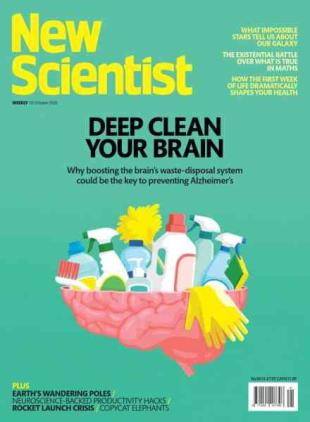
New Scientist, already mentioned in the Health category, earns full prominence here as one of the most essential weekly science publications available — its broad coverage of developments across all scientific disciplines, its willingness to engage with speculative and controversial ideas as well as established science, and its consistent quality of writing make it an essential companion for anyone who wants to stay genuinely current with the scientific enterprise. Nature and Science — the two most prestigious primary research journals in the world — include accessible news and commentary sections that bring their extraordinary scientific content to broader readerships.
Discover magazine covers science with particular emphasis on accessibility and narrative engagement, serving readers who want genuine scientific depth without technical prerequisites. Physics Today, published by the American Institute of Physics, serves the physics community with authoritative coverage of developments in the field alongside accessible features for the broader scientifically engaged readership. National Geographic, already cited in earlier categories, belongs here too — its coverage of earth science, ecology, and natural history is some of the finest science journalism produced for a general readership.
Accessing Science Magazines on WebMagz
The full Science collection is available as PDF downloads on WebMagz — preserving the diagrams, data visualizations, microscopy images, and astronomical photography that make science publications as visually informative as they are verbally precise. Browse the category to find publications matched to your specific scientific interests — by discipline, by level of technical depth, by emphasis on current research or historical science — and download directly. New issues are added regularly, keeping the collection current with a scientific enterprise that continues to produce genuinely surprising discoveries week by week.
Frequently Asked Questions About Science Magazines
- Do science magazines cover the social and political dimensions of science alongside the science itself? The better science publications engage seriously with the social, ethical, political, and philosophical dimensions of scientific research and its applications — addressing questions about research funding, publication practice, the relationship between science and policy, and the ethical implications of emerging technologies alongside the science content itself.
- Are there publications covering specific scientific disciplines in depth? The collection includes both broad-coverage science publications addressing the full range of scientific disciplines and specialist titles focusing on specific fields — physics, biology, neuroscience, earth science, mathematics, and others. Both general breadth and disciplinary depth are well represented.
- Are science magazines appropriate for readers without scientific training? The collection spans from publications written for a general curious readership with no assumed scientific background to more technically demanding titles that serve scientifically trained readers. The general science magazines in particular are written explicitly for non-specialists and serve as excellent entry points for readers at any starting level.
- Do these publications cover emerging and controversial areas of science? Yes — the best science publications engage with genuinely uncertain, actively debated, and frontier areas of scientific research alongside established knowledge, modeling the epistemic humility and critical thinking that good science requires. They distinguish carefully between established scientific consensus and active areas of research and debate.
- Are mathematical and theoretical sciences covered alongside experimental disciplines? Mathematics, theoretical physics, and other primarily theoretical scientific disciplines are covered in the Science category alongside the more familiar experimental sciences — reflecting the understanding that theoretical work is as central to the scientific enterprise as laboratory and field research.
-
Spektrum Psychologie - Oktober 2026Science 23 Oct 2026
-
Archeologie Magazine - Oktober 2026Science 23 Oct 2026
-
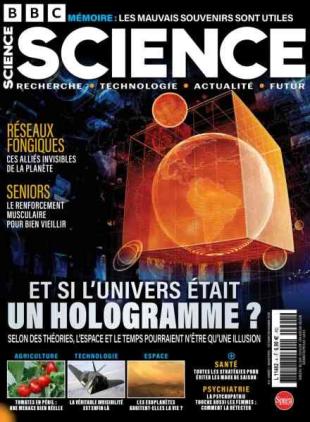
BBC Science France - Octobre-Novembre 2026Science 22 Oct 2026
-
Teknikhistoria - Oktober 2026Science 21 Oct 2026
-
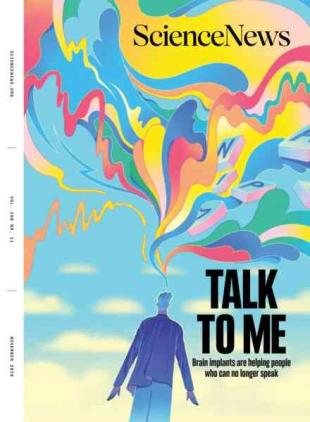
Science News - November 2026Science 20 Oct 2026
-
Illustrerad Vetenskap Fakta - Oktober 2026Science 20 Oct 2026
-
Spektrum Die Woche - 15 Oktober 2026Science 19 Oct 2026
-
alchedek - October 2026Science 18 Oct 2026
-
Rock & Gem - November-December 2026Science 17 Oct 2026
-
Very Interesting - September 2026Science 15 Oct 2026
-
Science - 15 October 2026Science 15 Oct 2026
-
I'Astrofilo - Settembre-Ottobre 2026Science 15 Oct 2026
-
New Scientist USA - October 17 2026Science 15 Oct 2026
-
PM Schneller Schlau - Oktober 2026Science 14 Oct 2026
-
Illustrerad Vetenskap - 6 Oktober 2026Science 14 Oct 2026
-
New Scientist USA - October 10 2026Science 13 Oct 2026
-
Discover - June 2013Science 13 Oct 2026
-
Spektrum Die Woche - 8 Oktober 2026Science 12 Oct 2026
-
American Scientist - January-February 2012Science 12 Oct 2026
-
Spektrum der Wissenschaft - November 2026Science 12 Oct 2026
-
Science - 8 October 2026Science 12 Oct 2026
-
American Scientist - May-June 2015Science 12 Oct 2026
-
American Scientist - May-June 2011Science 12 Oct 2026
-
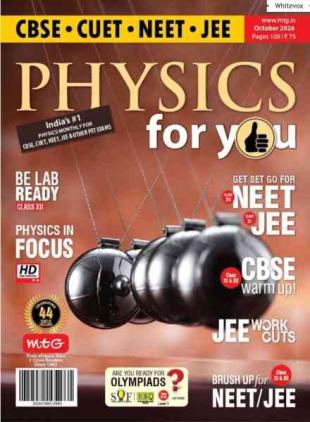
Physics For You - October 2026Science 12 Oct 2026
-
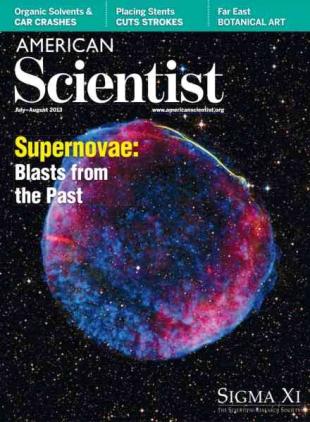
American Scientist - July-August 2013Science 11 Oct 2026
-
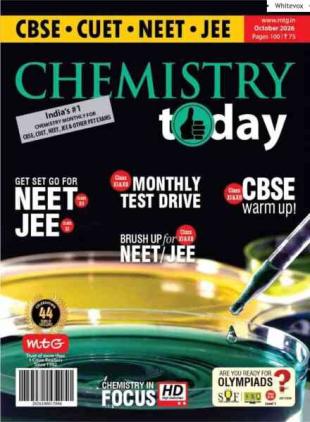
Chemistry Today - October 2026Science 11 Oct 2026
-
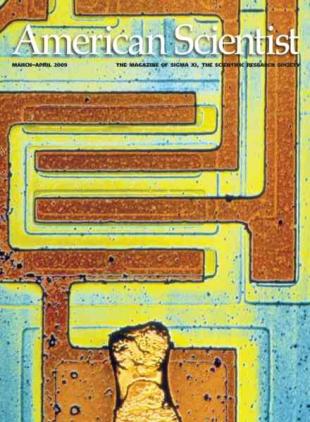
American Scientist - March-April 2009Science 11 Oct 2026
-
American Scientist - March-April 2011Science 11 Oct 2026
-
American Scientist - May-June 2018Science 11 Oct 2026
-
American Scientist - January-February 2011Science 11 Oct 2026
-
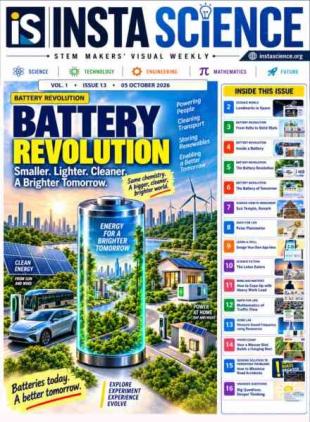
InstaScience - Issue 13 2026Science 10 Oct 2026
-
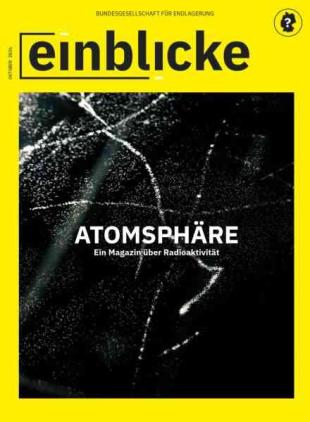
Einblicke - Oktober 2026Science 10 Oct 2026
-
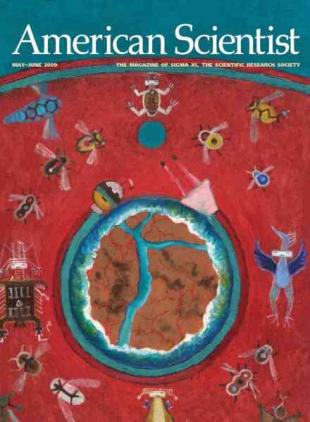
American Scientist - May-June 2009Science 10 Oct 2026
-
American Scientist - January-February 2020Science 10 Oct 2026
-
American Scientist - March-April 2010Science 10 Oct 2026
-
Mathematics Today - October 2026Science 10 Oct 2026
-
American Scientist - January-February 2013Science 10 Oct 2026
-
American Scientist - July-August 2010Science 9 Oct 2026
-
Het Weer Magazine - Oktober 2026Science 9 Oct 2026
-
American Scientist - March-April 2012Science 9 Oct 2026
-
Welt der Wunder - November 2026Science 9 Oct 2026
-
American Scientist - May-June 2014Science 9 Oct 2026
-
Spektrum Gehirn&Geist - November 2026Science 9 Oct 2026
-
Sciences Humaines - Octobre 2026Science 8 Oct 2026
-
Discover - Ticked 2013Science 8 Oct 2026
-
American Scientist - May-June 2010Science 8 Oct 2026
-
American Scientist - July-August 2012Science 8 Oct 2026
-
American Scientist - May-June 2019Science 8 Oct 2026
-
Philosophy Now - October-November 2026Science 8 Oct 2026