The World Runs on Code — Technology Magazines on WebMagz
Technology is no longer a sector — it is the environment. Every industry, every profession, every aspect of daily personal life now operates within technological systems whose design, operation, and evolution shapes what is possible, what is efficient, and what is safe. Understanding technology — not at the level of operational competence but at the level of genuine comprehension — has become one of the most important forms of literacy available. The Technology category on WebMagz brings together a carefully curated collection of publications covering the full breadth of the technological world: consumer electronics, software and platforms, artificial intelligence, robotics, semiconductors, telecommunications, cybersecurity, emerging technologies, and the social, political, and ethical dimensions of a world being continuously reshaped by human ingenuity and its unintended consequences.
Processing the Collection — What Technology Publishing Covers
The Technology category on WebMagz spans the remarkable breadth of modern technological culture and industry. Consumer technology publications cover the devices, platforms, and services that shape daily life for billions of people — smartphones and computers, streaming services and social platforms, smart home technology and wearables, and the rapidly expanding ecosystem of connected devices that constitute the Internet of Things. These are the titles that review products with rigor, explain platform developments with clarity, and help readers navigate the overwhelming abundance of technological choice.
Enterprise and professional technology publications serve the organizations and professionals making the large-scale technology decisions that determine how businesses, governments, and institutions operate — covering cloud infrastructure, enterprise software, cybersecurity, data management, and the strategic dimensions of digital transformation. Semiconductor and hardware publications address the physical foundations of the technological world — the chips, processors, memory systems, and manufacturing processes that determine what software can do and how quickly. Artificial intelligence and machine learning magazines cover the most consequential technology development of the current era — tracking research advances, discussing applications across industries, examining the ethical and social implications of systems that can match or surpass human performance in specific domains.
Robotics and automation publications cover the physical manifestation of AI-driven change — industrial robots, autonomous vehicles, delivery drones, surgical robots, and the full range of automated systems transforming manufacturing, logistics, healthcare, and agriculture. Telecommunications and networking magazines address the infrastructure that connects everything — 5G and beyond, fibre optics, satellite communications, and the technical and regulatory landscape of global connectivity. And technology culture and criticism publications engage with the social and political dimensions of the technological world — examining how technology companies exercise power, how algorithmic systems affect public life, and what values and choices are embedded in the technical systems that increasingly govern human experience.
Why Technology Magazines Offer What Tech News Doesn't
Technology news moves faster than any other field of journalism — and that speed creates its own problems. The pressure to publish immediately produces coverage that is reactive rather than analytical, superficial rather than deep, and frequently wrong in ways that corrections cannot fully remedy. The hype cycles around new technologies — AI, blockchain, VR, autonomous vehicles, and many others before them — are partly a product of journalism that lacks the technical background and analytical patience to distinguish genuine capability from promotional claim.
Technology magazines, working on longer editorial cycles and with more space for analysis, provide something that the news ecosystem consistently fails to deliver: measured, expert evaluation of what technology can actually do, what it costs, what risks it carries, and where it fits in a broader technological and social context. A well-reported magazine feature on the current state of a particular AI technology, written by someone who has actually engaged with the technical literature and spoken to researchers, is a fundamentally different document from a news article written to meet a same-day deadline.
For technology professionals — engineers, product managers, CTOs, security researchers, data scientists — quality publications in this category provide the breadth of technical awareness that specialist work inevitably narrows. Staying genuinely informed across the full landscape of technological development, rather than only the specific stack or domain of your current work, is increasingly important in an industry where adjacent technologies regularly reshape what's possible in any given specialty.
Engineers, Executives, Enthusiasts, and Citizens — The Technology Readership
The Technology category serves a broader readership than its subject matter might initially suggest. Technology professionals — engineers, developers, data scientists, product managers, security specialists, and the executives who lead technology organizations — are the obvious core audience, following the publications that keep them technically current and strategically informed. But the technology readership extends well beyond these professional categories.
Business leaders across every industry follow technology publications because technology decisions are now business decisions, and the executives who don't understand the technologies their organizations depend on are operating with a dangerous blind spot. Policy makers, regulators, and civil society organizations working on technology governance follow the analytical publications that provide the technical context for the regulatory and legislative questions they address. Investors in technology companies follow the publications that give them insight into technical capability and strategic positioning beyond what financial analysis alone reveals.
A large and engaged general readership — the people who care about the technology shaping their lives, their work, and their democratic institutions, and who want to understand it better than headline coverage allows — is perhaps the most important audience of all. Technology is too consequential and too pervasive to be understood only by specialists, and the publications in this category that serve this general readership with genuine depth and accessibility are performing an essential public function.
The Publications That Explain the Technical World
The Technology collection on WebMagz features titles with strong reputations for rigorous, intelligent technology coverage. WIRED, already present in multiple categories, is central here — its combination of deeply reported technology features, profiles of significant figures in the tech world, and willingness to engage with the social and political implications of technology makes it the essential general technology read for a broad, engaged audience.
MIT Technology Review, already cited in the Digital category, belongs equally here — its technical authority and genuine connection to the cutting edge of research makes it the most credible publication available for readers who want to understand what technology can actually do rather than what its promoters claim. IEEE Spectrum, published by the Institute of Electrical and Electronics Engineers, serves the engineering professional community with authoritative technical coverage of the full range of electrical, electronic, and computing technologies.
Ars Technica, primarily digital but with print dimensions, has established itself as one of the most technically rigorous and editorially serious technology publications available — its coverage of hardware, software, security, and science consistently operates at a level of technical depth that mainstream technology journalism rarely matches. Computerworld and InformationWeek serve the enterprise technology readership with coverage of the organizational and strategic dimensions of large-scale technology adoption and management. Hackin9 and specialist cybersecurity publications serve the security community with the technical depth that an increasingly critical professional field demands.
Frequently Asked Questions About Technology Magazines
- Is there overlap between the Technology category and the Computers and Digital categories on WebMagz? Yes — there is natural overlap between these three categories, reflecting the reality that computing, digital culture, and technology more broadly are deeply interconnected. The Technology category tends to focus on the broader industry, infrastructure, and emerging technology landscape, while Computers addresses personal computing more specifically and Digital focuses on internet culture and online business. Many readers will find relevant content across all three.
- Do technology magazines cover cybersecurity in depth? Cybersecurity is a significant strand within the Technology category — covered both in dedicated security publications and as a major thread in the broader technology titles. Given the growing importance of digital security for individuals, organizations, and governments alike, this coverage is both extensive and genuinely important.
- Are there publications covering the ethics and social impact of technology alongside technical content? Yes — technology ethics, the social impact of algorithmic systems, the political economy of platform companies, and the broader questions about what values are embedded in technical choices are engaged seriously in several publications within the category. This critical dimension of technology journalism is increasingly important and well represented in the collection.
- Can non-technical readers find accessible content in the Technology category? The collection spans from publications written for technically sophisticated professional audiences to those addressing technology for engaged general readers with no assumed technical background. The most important technology publications understand that their subject is too consequential to be accessible only to specialists and write accordingly.
- Do these magazines cover hardware as well as software and platforms? Both hardware and software are well covered in the Technology category — from semiconductor design and manufacturing to enterprise software platforms, consumer devices, and the embedded systems that power industrial and automotive applications. The physical foundations of the digital world receive the same editorial attention as the software and services built upon them.
Accessing Technology Magazines on WebMagz
Every title in the Technology category is available as a PDF download on WebMagz — preserving the technical diagrams, product photography, benchmark charts, and information graphics that make technology publications so information-dense and visually engaging. Browse the collection to find publications matched to your specific technology interests and level of technical engagement, and download directly. New issues arrive regularly, keeping pace with an industry that redefines what's possible with every passing quarter.
-
Tech AI Magazine - October 2026Technology 23 Oct 2026
-
AI Complete Manual - Autumn 2026Technology 23 Oct 2026
-
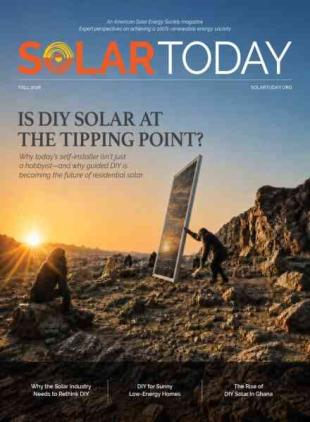
Solar Today - Fall 2026Technology 20 Oct 2026
-
Elektor Germany - Mai-Juni 2021Technology 20 Oct 2026
-
Techlife News - October 17 2026Technology 19 Oct 2026
-
Digital Manufacturing - Ausgabe 6 2026Technology 19 Oct 2026
-
c't Make - Electric Special - Mai 2021Technology 18 Oct 2026
-
Neue Energie - Oktober 2026Technology 18 Oct 2026
-
Elektor Germany - Marz-April 2022Technology 18 Oct 2026
-
Aktien Magazin - 11 Oktober 2026Technology 18 Oct 2026
-
Techlife News - October 10 2026Technology 16 Oct 2026
-
Flug Revue - November 2026Technology 15 Oct 2026
-
Elbilen - Oktober 2026Technology 15 Oct 2026
-
Eureka - Autumn 2026Technology 14 Oct 2026
-
Guter Rat - November 2026Technology 13 Oct 2026
-
Setagaya Base- July 2026Technology 12 Oct 2026
-
The Technology Express - September 2026Technology 12 Oct 2026
-
Funkamateur - Oktober 2026Technology 11 Oct 2026
-
 Equipment Indonesia - September 2026Technology 9 Oct 2026
 -
 Gjor Det Selv - 29 September 2026Technology 8 Oct 2026
 -
Teknik & prylar - Oktober 2026Technology 8 Oct 2026
-
Rad & Ron - 30 September 2026Technology 7 Oct 2026
-
Wetenschap in Beeld - November 2026Technology 7 Oct 2026
-
Techlife News - 3 October 2026Technology 7 Oct 2026
-
Practical Wireless - November 2026Technology 7 Oct 2026
-
How It Works - Issue 221 2026Technology 7 Oct 2026
-
Make - Volume 7 - August 2006Technology 6 Oct 2026
-
Make - Volume 17 - March 2009Technology 6 Oct 2026
-
Aktien Magazin - 4 Oktober 2026Technology 6 Oct 2026
-
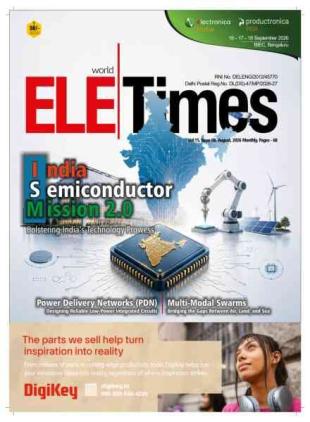
ELE Times - September 2026Technology 6 Oct 2026
-
Rebondir - Septembre-Octobre 2026Technology 6 Oct 2026
-
Make - Volume 43 - January 2015Technology 5 Oct 2026
-
Make - Volume 18 - May 2009Technology 5 Oct 2026
-
Make - Volume 26 - April 2011Technology 5 Oct 2026
-
Make - Volume 11 - August 2007Technology 5 Oct 2026
-
Make - Volume 3 - August 2005Technology 5 Oct 2026
-
Make - Volume 33 - January 2013Technology 5 Oct 2026
-
Make - Volume 34 - April 2013Technology 5 Oct 2026
-
Make - Volume 15 - August 2008Technology 4 Oct 2026
-
Make - Volume 6 - May 2006Technology 4 Oct 2026
-
Voice & Data - October 2026Technology 4 Oct 2026
-
Make - Volume 44 - March 2015Technology 4 Oct 2026
-
Make - Volume 13 - March 2008Technology 3 Oct 2026
-
Servo - September-October 2022Technology 3 Oct 2026
-
Aktien Magazin - 28 September 2026Technology 3 Oct 2026
-
ELE Times - August 2026Technology 3 Oct 2026
-
Make - Volume 23 - July 2010Technology 2 Oct 2026
-
Make - Volume 27 - July 2011Technology 2 Oct 2026
-
Make - Volume 12 - November 2007Technology 2 Oct 2026
-
Make - Volume 21 - January 2010Technology 2 Oct 2026
-
Servo - September-October 2019Technology 2 Oct 2026
-
Servo - January-February 2020Technology 2 Oct 2026
-
Make - Volume 57 - June-July 2017Technology 2 Oct 2026
-
Make - Volume 22 - April 2010Technology 2 Oct 2026